Serving Anoka, Hennepin, Ramsey, Washington, Scott & Dakota Counties
Speech Therapy
Helping your child find their voice, in whatever form that takes
Our speech-language therapy builds communication skills through play, whether that means new words, longer sentences, or an alternative way to express what your child needs.

What Is Speech Therapy?
Communication support built around how your child expresses themselves
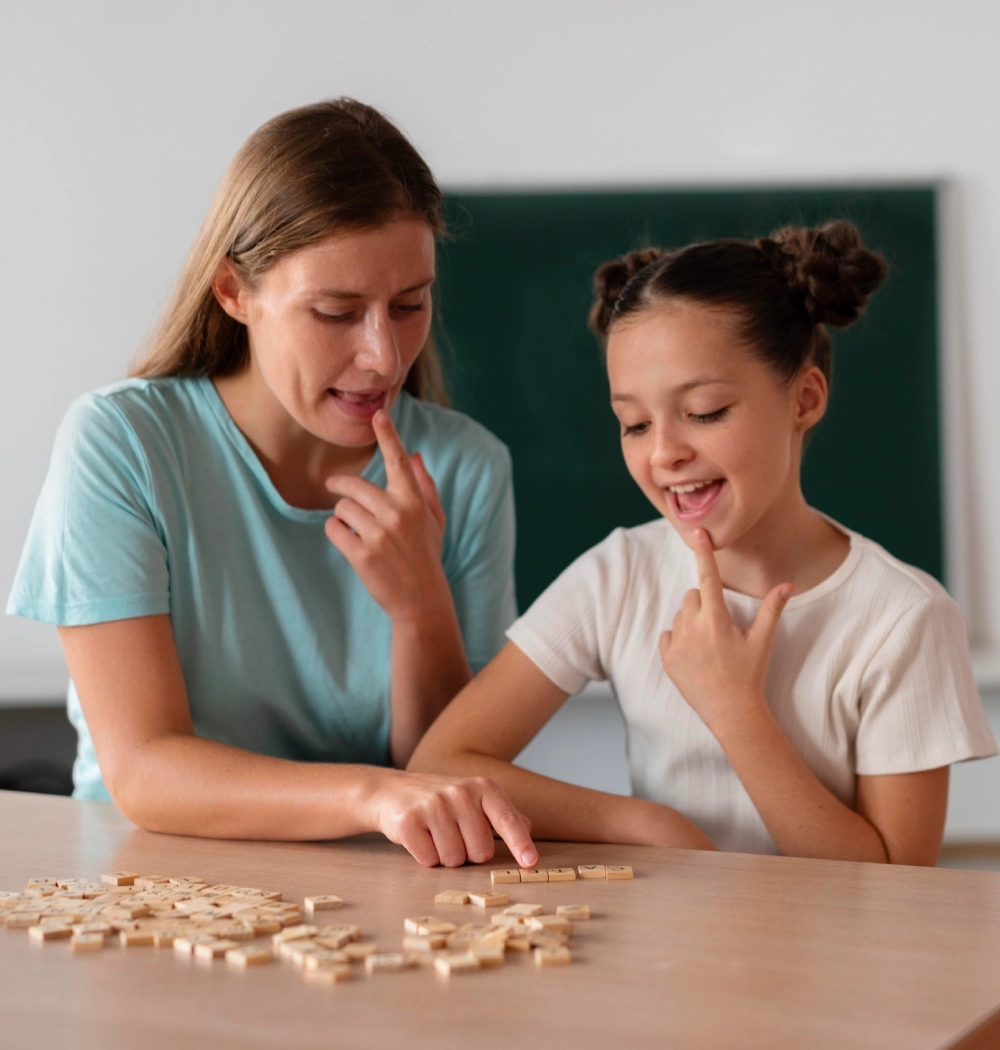
Speech-language therapy addresses far more than pronunciation. Our speech-language pathologists work on understanding language, using words and sentences, and the back-and-forth of real conversation, meeting your child exactly where their communication is today.
For children who are non-verbal or minimally verbal, sessions may also introduce alternative communication tools, like picture systems or speech-generating devices, so your child always has a way to be understood.
What speech therapy can address
Where We Focus
From building language to communicating beyond words
Building Language Skills
Communication Beyond Words
How Sessions Work
From where your child is today to real conversation
01
Assess Communication
We start with where your child’s communication is today, building on CMDE findings and everyday observation.
02
Set Language Goals
Specific, measurable goals are added to your child’s Individual Treatment Plan.
03
Play-Based Sessions
Therapy happens through games, stories, and natural conversation, not flashcards and drills.
04
Expand & Track
As your child grows, we build on new skills and adjust goals to match.
Often Paired With Speech Therapy
Communication and motor skills often develop together
Occupational therapy supports the motor and sensory skills that often work hand-in-hand with communication development.
Common Questions
Questions families ask about speech therapy
Does my child need to already be talking to start speech therapy?
No. Speech therapy supports children at every stage, including those who are non-verbal or just beginning to use sounds and gestures to communicate.
What if my child needs an alternative way to communicate?
We introduce tools like picture exchange systems or speech-generating devices when they help your child communicate more independently, alongside continued work on verbal skills.
How is speech therapy different from ABA therapy?
Speech therapy focuses specifically on language and communication skills, led by a speech-language pathologist, while ABA addresses a broader range of behavioral and skill-building goals. Many children benefit from both, working together.
How often will my child have speech therapy sessions?
Frequency is set in your child’s Individual Treatment Plan based on their specific communication goals and needs.
Is speech therapy covered by insurance?
For most families enrolled in Medical Assistance, MinnesotaCare, or MA-TEFRA, speech therapy is covered as part of the EIDBI benefit once it is included in your child’s treatment plan.
Ready to support your child’s communication?
Reach out and our team will help determine if speech therapy is the right fit as part of your child’s treatment plan.